
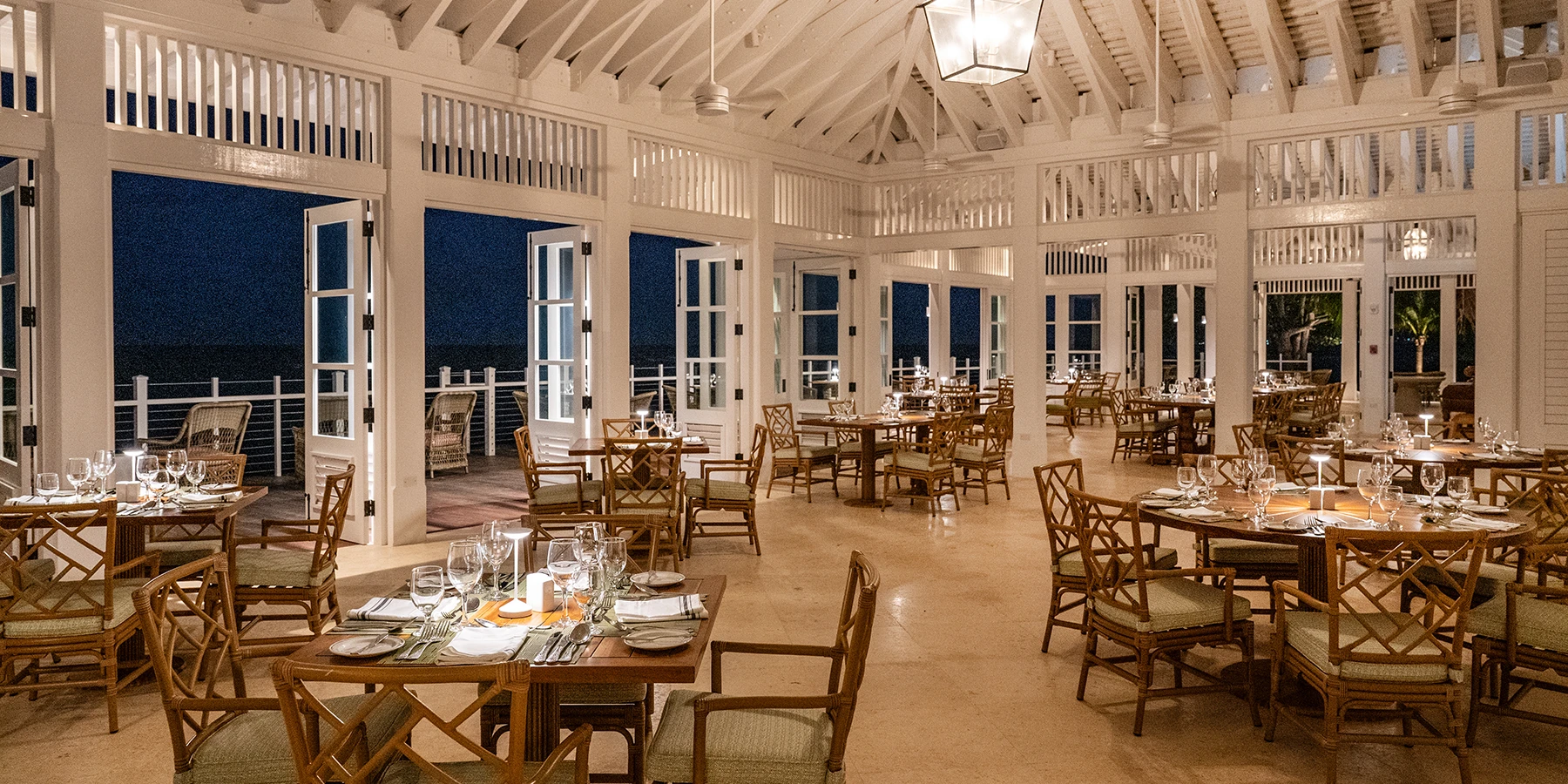
There are few places in the world where a missed putt can be consoled by the scent of pimento smoke drifting across an ocean breeze. In Jamaica, golf is no longer just about immaculate fairways and championship layouts — it is about what happens after the 18th hole. It is about linen-draped tables overlooking turquoise horizons, chefs reimagining island ingredients, and tasting menus that rival the best fine dining restaurants in Jamaica. Here, the rhythm of the game flows seamlessly into the theatre of the table.
Across the island’s most celebrated courses — from Montego Bay to Ocho Rios — the culinary experience has become as carefully curated as the greens themselves. At White Witch, where the course rolls dramatically through the hills of Rose Hall, the panoramic views stretch across the Caribbean Sea. Yet as memorable as the scenery is, the clubhouse dining has evolved into its own attraction. Modern Jamaican cuisine takes centre stage: locally caught snapper finished with a citrus beurre blanc, jerk-spiced lamb with roasted breadfruit purée, and desserts infused with Blue Mountain coffee and dark rum.
This is not accidental. Jamaica’s leading resorts have recognised that today’s golf traveller arrives with a sophisticated palate. Many are as interested in chef credentials and wine pairings as they are in yardage and course ratings. As a result, clubhouses have transformed into culinary destinations, drawing inspiration from both international gastronomy and the island’s rich agricultural heritage.
At Half Moon, one of the Caribbean’s most iconic resorts, dining after a round is an immersive experience. The property’s chefs work closely with local farmers and fishers, ensuring that what appears on the tasting menu reflects the island’s seasons. A typical evening might begin with delicate ackee tartlets topped with smoked marlin, followed by a Scotch bonnet-infused lobster bisque. Main courses showcase the vibrancy of Caribbean produce — heirloom callaloo, roasted pumpkin, tamarind-glazed pork — plated with the refinement of a metropolitan dining room.
Yet what makes dining on Jamaica’s signature courses so distinctive is not only the quality of the cuisine. It is the setting. Imagine sitting on a terrace as the sun melts into the horizon, the fairways glowing gold in the fading light. The air carries a mix of salt and spice. Somewhere in the distance, a steel pan hums softly. The line between sport and celebration dissolves.
Cinnamon Hill offers another example of this seamless blend. Perched between mountain and sea, the course is known for its challenging layout and cinematic views. But as twilight settles, the clubhouse becomes a stage for culinary storytelling. Menus often reinterpret Jamaican classics with contemporary flair — think slow-braised oxtail ravioli, escovitch-style vegetables presented with artistic precision, or plantain gnocchi finished with aged parmesan and thyme oil. Paired with a thoughtfully curated rum flight or a crisp white wine, the meal becomes an extension of the day’s play.
In 2026, Jamaica’s golf dining scene is also embracing sustainability. Chefs are placing renewed emphasis on hyper-local sourcing, reducing food miles, and celebrating indigenous ingredients. Lionfish, an invasive species in Caribbean waters, is increasingly featured as a sustainable seafood option. Breadfruit — once a colonial staple — is now elevated into refined purées and crisps. Even cocktails reflect this ethos, with bartenders crafting drinks from fresh sorrel, soursop, and coconut water harvested just steps away.
This convergence of golf and gastronomy is reshaping the island’s tourism narrative. No longer is Jamaica defined solely by beaches and all-inclusive buffets. Instead, it is positioning itself as a destination where championship sport meets culinary excellence. The island’s golf clubs are contributing meaningfully to that evolution, competing not just on course design but on the strength of their kitchens.
For visiting players, the experience feels holistic. The morning might begin with a challenging front nine under clear Caribbean skies. By midday, a light lunch of grilled fish tacos and tropical salads refuels the body. And in the evening, a chef’s tasting menu unfolds course by course, each dish echoing the landscape — the heat of the sun in a pepper sauce, the freshness of the sea in a ceviche, the sweetness of the hills in a rum-infused dessert.
Ultimately, dining on Jamaica’s signature courses is about more than indulgence. It is about storytelling. The ingredients speak of heritage; the presentation reflects ambition; the views anchor everything in place. Golf provides the structure, but food provides the memory. Long after the scorecard is tucked away, it is often the flavours that linger — the gentle heat of Scotch bonnet, the richness of dark chocolate and rum, the brightness of freshly squeezed lime.
In Jamaica, the 19th hole is not an afterthought. It is a destination in its own right. And as 2026 unfolds, the island’s fairways are proving that the true measure of a great round may well be the meal that follows — savoured slowly, ocean stretching endlessly beyond, as day turns to night over the Caribbean Sea.