
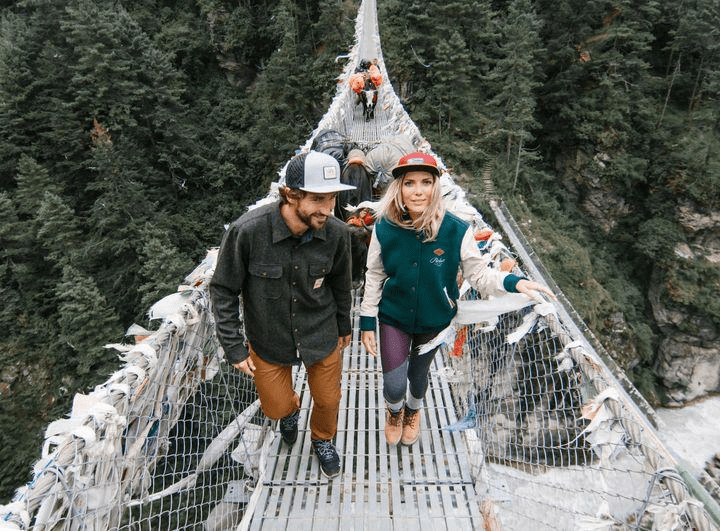
I have slept in a lot of bad beds on Nepal trails.
Thin mattresses that smelled of damp wool. Shared dormitories where someone’s altitude headache kept the whole room awake at 2 AM. Dining rooms so cold you could see your breath over a bowl of instant noodles. For years, I told myself this was part of the experience. That the discomfort was the point. That anyone who wanted something softer was missing what Nepal was really about.
I was wrong. And it took two decades of hiking in Nepal — and one very honest conversation with a client who had just returned from a luxury Everest Base Camp trek — to finally admit it.
She said something I have never forgotten: “I finally saw the mountains properly, because I wasn’t too exhausted to look at them.”
The Budget Trekking Years
I started trekking the Nepal Himalayas in the early 2000s. Back then, the teahouse trail to Everest Base Camp was a different place — rougher, quieter, with far fewer lodges and almost no concept of comfort at altitude. You packed light, you moved fast, and you accepted that your body would pay the price.
I loved it. The rawness of it. The way a hot cup of butter tea tasted like the best thing in the world after eight hours on a cold trail. The camaraderie of a shared dining room where strangers compared blisters and swapped route tips. There is something genuinely powerful about stripping travel back to its essentials.
But here is what nobody tells you about budget Everest trekking: the discomfort accumulates. By day ten, the lack of sleep has worn down your defenses. By day twelve, the cold has seeped into your bones in a way that a thin sleeping bag cannot fix. By the time many trekkers reach Base Camp at 5,364 meters, they are too depleted to feel anything beyond relief that it is over.
That is not the Everest experience anyone came for.
What Actually Changes When You Go Luxury
I run a trekking company in Kathmandu. Over the years I have watched the luxury segment of Everest trekking evolve from a niche offering into something genuinely transformative. And I want to be precise about what ‘luxury’ actually means on this trail, because it is not what most people picture when they hear the word.
It is not about helicoptering over the hard parts or avoiding the altitude. The trail is the trail. You still walk every step from Lukla to Base Camp. The Khumbu Icefall still sits above you. The mountains are still enormous and indifferent and breathtaking in the most literal sense of the word.
What changes is everything surrounding those moments.
On a standard EBC trek, you share a dormitory with strangers and hope the person above you does not snore. On a luxury trek, you have a private en-suite room at every overnight stop. That single difference changes the quality of your sleep, which changes your acclimatization, which changes your physical performance on the trail, which changes how the entire experience feels.
The food matters too. Standard teahouse menus offer dal bhat, noodle soup, and the occasional yak steak of uncertain age. Luxury lodge dining means freshly prepared meals using quality ingredients, with menus that account for the caloric demands of high-altitude trekking. You arrive at each day’s end with a hot shower available, a proper meal waiting, and a warm room that holds its heat through the night.
Then there is the guiding. A luxury Everest trekking experience includes a dedicated, experienced guide whose sole focus is you and your group — not twelve clients strung out across a mountain trail. They monitor your acclimatization carefully. They adjust the pace to your body’s signals rather than a fixed schedule. They know every family along the route, every lodge owner, every shortcut and every view that the standard itinerary misses.
Getting There: The Part Nobody Writes About
Most Everest trekking articles begin at Lukla. Few explain what happens before you reach that famous runway.
Domestic flights to Lukla now depart from Ramechhap (Manthali) rather than Kathmandu’s Tribhuvan Airport. That means a pre-dawn car hire from Kathmandu for the four-hour drive to Ramechhap to catch an early morning flight. It is not glamorous. But a good operator handles this seamlessly — private vehicle, early pickup, no crowded shared jeeps, a driver who knows the mountain roads. By the time you reach Lukla, you are awake, fed, and ready, rather than rattled and disoriented.
This kind of end-to-end logistics management is what separates a truly luxury experience from simply booking a nicer lodge on the standard trail. Every transition — airport to hotel, hotel to Ramechhap, Lukla to the trail — is handled without friction. You are a trekker from the moment you land in Kathmandu, not a travel coordinator.
What the Trail Looks Like Through Different Eyes
I have walked the route from Lukla to Base Camp more times than I can accurately count. Somewhere past twenty, I stopped keeping track. And what I notice now — after experiencing the trail across every budget level — is how differently the same landscape registers depending on your physical state.
When you are cold, sleep-deprived, and eating badly, the beauty of the Khumbu becomes something you register intellectually but cannot fully absorb. You see Ama Dablam rising above the trail and you think: yes, that is a remarkable mountain. But you do not feel it. The exhaustion creates a glass wall between you and the experience.
When you are rested, warm, and properly fed — when your body has the resources to process what your eyes are seeing — the same mountain stops you in your tracks. You stand there for five minutes and say nothing, because there is nothing adequate to say.
This is what the best luxury Everest Base Camp experiences understand and design for. Not comfort as an end in itself, but comfort as the foundation that makes genuine awe possible.
The Acclimatization Difference
This is where a luxury approach to Everest trekking genuinely affects safety, not just comfort.
Budget itineraries are often optimized for speed — get to Base Camp and back in the minimum number of days, keeping costs low. The problem is that altitude sickness does not respect tight schedules. The classic rule of high-altitude trekking is ‘climb high, sleep low,’ and proper acclimatization requires genuine rest days, not just shorter hiking days.
A well-designed luxury itinerary builds acclimatization days into the schedule as proper recovery time — light walks in the morning, full rest in the afternoon, early dinners, early sleep. The guide monitors oxygen levels daily. If something looks wrong, the itinerary adapts. There is no pressure to keep pace with a large group or stick to a rigid schedule that the budget model demands.
The result is not just a more comfortable experience. It is a safer one, with a genuinely higher summit rate for those whose goal is to reach Base Camp in a strong physical state rather than a depleted one.
Who This Trek is Actually For
I want to address the assumption that luxury trekking is for people who do not really want to trek. In my experience, the opposite is true.
The people who book a luxury EBC experience are typically experienced travelers who have done difficult trips before and understand exactly what they are trading comfort for. They want the Everest experience in full — the trail, the altitude, the culture, the Sherpa communities, the ice and rock and silence of the high Himalayas. They simply refuse to let exhaustion and poor sleep rob them of the ability to be present for it.
It is also, increasingly, the right choice for trekkers over forty who have done their budget years and know their bodies well enough to recognize that recovery at altitude is not optional. And for anyone with a limited holiday window who cannot afford to spend two of their fourteen days laid up with altitude sickness in a cold teahouse dormitory.
If any of this resonates, I would genuinely recommend looking at what a specialist Nepal operator can offer before defaulting to the standard trail package. The itinerary we run at Peregrine — our luxury Everest Base Camp trek — was built around exactly the principle my client described: arriving at Base Camp with enough left in the tank to actually feel what you came to feel.
What I Tell Every Trekker Now
When people ask me whether they should do the budget trail or the luxury experience, I always ask them one question: how many times are you planning to do this?
If the answer is once — which for most people it is — then I tell them to do it properly. Everest Base Camp is not a tick on a list. It is a place that deserves your full attention, your full energy, and your full emotional presence. And those things are hard to summon when you have not slept in four days and your toes went numb somewhere on the Tengboche descent.
I spent years telling myself that the discomfort was the experience. What I understand now — after more than two decades of hiking in Nepal and watching how differently people absorb the same mountains depending on how well they are cared for — is that the experience is the mountains. Everything else is just logistics. And good logistics should disappear into the background so completely that you forget they exist.
That is what luxury Everest trekking, done well, actually gives you: the mountains, without the noise.